What Is a Food Broker, and Do You Need One?
What you can do on this page
- Read the short answer just below.
- Use the free tool to see what a broker would cost you.
- Ask for a free one-page shelf plan for your own food. A person writes it.
Short answer
A food broker is a contract sales representative. The broker does not buy or hold your product. The broker sells it into stores and to other buyers, and is paid by commission or a fee. Many small food companies hire a broker to sell into stores.
How a broker deal works
- ShortlistBrokers who call on the stores you want
- Agree termsCommission, area, term and exit
- Pitch buyersThe broker presents your line
- ReviewNew stores and sales, every quarter
What would a broker cost you?
Rates are published ranges, not quotes: commission about 3 to 5% in conventional grocery (a grocery broker cost guide) and 8 to 12% in natural and specialty (a natural-channel broker guide), both accessed 2026-10-27; A third guide puts broker commission overall at 3 to 7% (a CPG fees guide). Some brokers charge a monthly retainer instead. Your agreement sets the real rate.
In our product
What you get, as our customers see it.
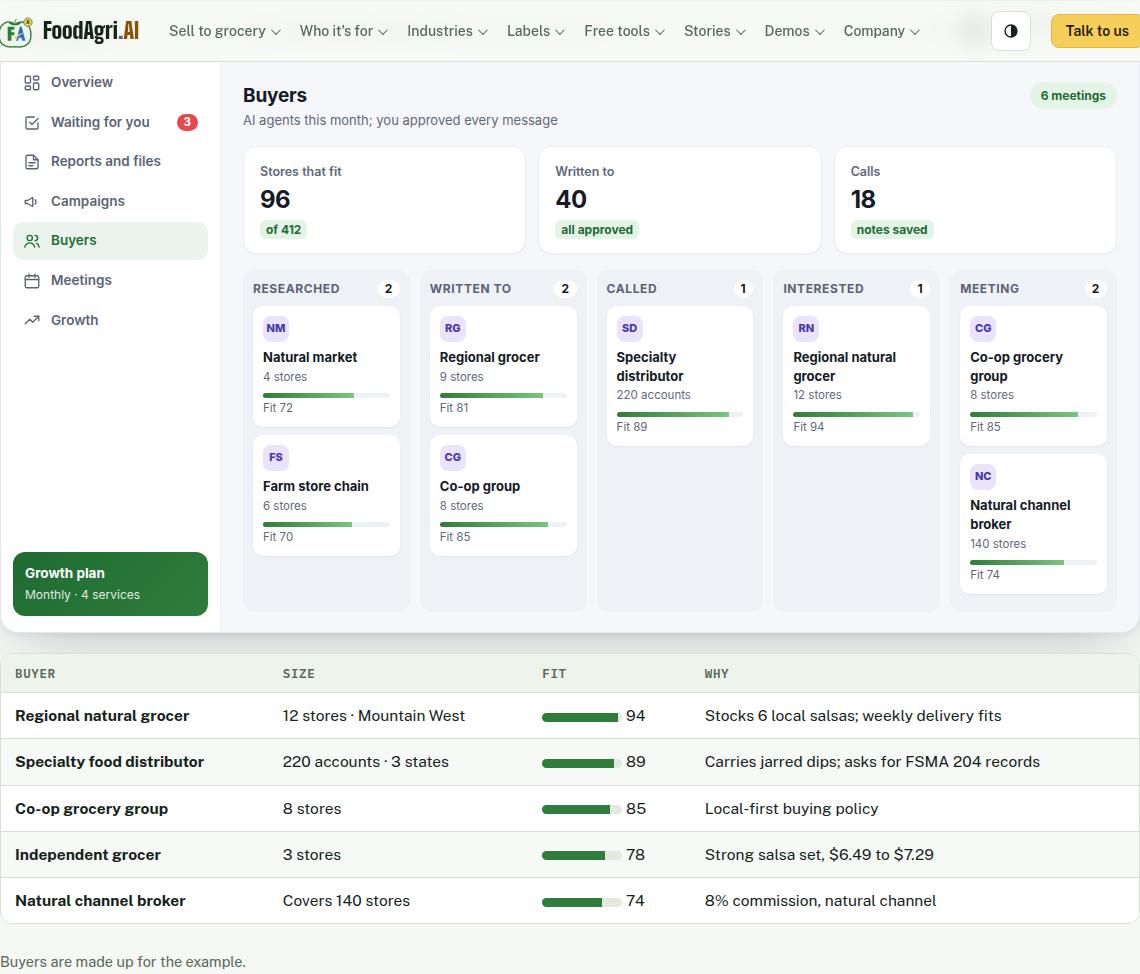
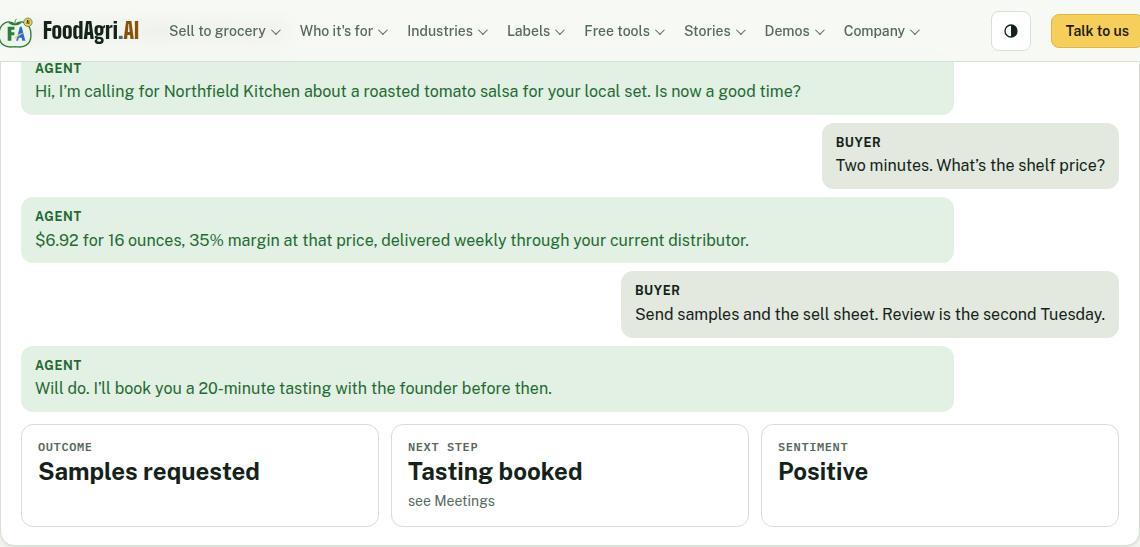
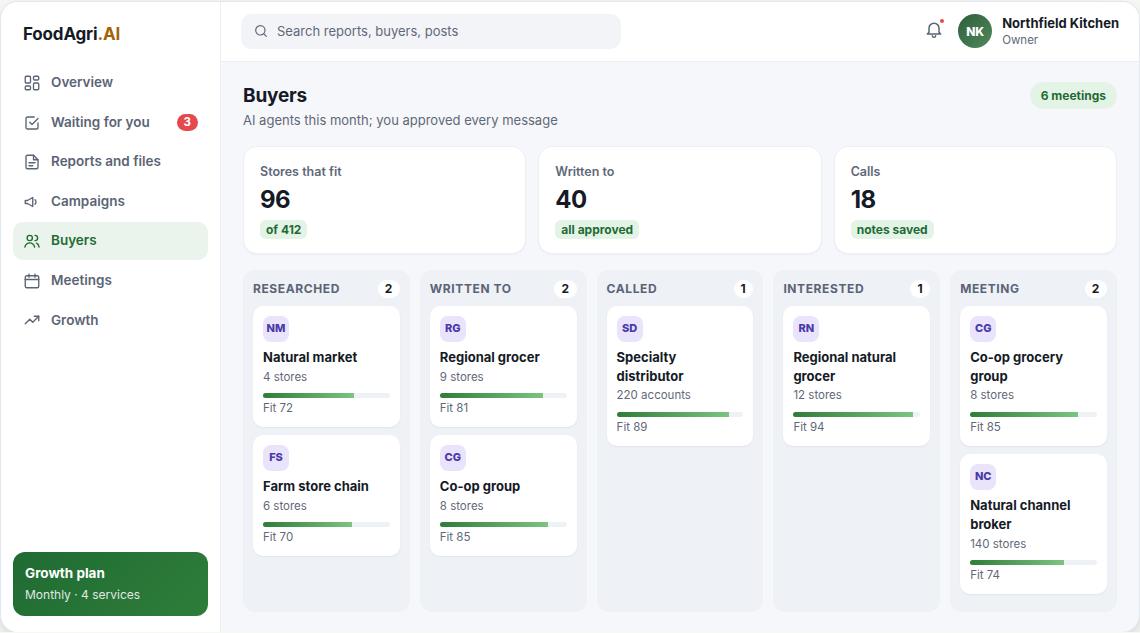
Real screens from our reports and dashboard, made for a made-up brand. Click any one to open the full sample.
What a broker does for a food maker
- Makes the sale and represents your product line to the retailer
- Helps your products get picked up and moved at the store
- Often works a set geographic area and calls on its key retail accounts
What a broker usually does not do
Brokers are normally not responsible for shipping, invoicing or inventory control. A broker who carries many lines also may not know yours as well as your own team would.
How to choose a broker
- Which retailers and channels do they already call on?
- Which similar products do they carry, and could that conflict with yours?
- How are they paid, and what does the agreement say about term and exit?
- Can they point to recent work you can check with a call?
Broker or distributor?
A broker sells for you and does not own the stock. A distributor buys products from makers, stocks them and resells to retailers.
Can I sell without a broker?
Yes. Direct selling is an option. A broker can save time when you want to reach many buyers.
Not sure a broker is worth it yet?
Tell us your product and stores. A person sends back a shelf plan with your numbers, with or without a broker.
Questions makers ask
How are food brokers paid?
Most are paid a commission on the sales they make for you, and some charge a monthly fee or a mix. The rate and the term are set in your agreement.
Does a broker buy my product?
No. A broker sells for you and does not own the stock. A distributor buys, stores and delivers it.
When should a small maker hire a broker?
When you want to reach many buyers in an area and selling direct takes more time than you have. Many makers sell direct to a few local stores first.
Sources
"The Role of Distributors and Brokers", a guide that names its own source as "Canadian Grocery Retail Guide, Section 1" (the document shows no publisher or date): https://prod-agr.mt.gov/_docs/marketing-docs/sellingtoretail/The_Role_of_Distributors_and_Brokers.pdf
"Food Broker", Career Information Center, 9th edition (Gale), via Encyclopedia.com: https://www.encyclopedia.com/economics/news-and-education-magazines/food-broker. It says food brokers are independent sales agents who negotiate sales for producers and manufacturers and are paid on a commission basis.
Commission ranges: Eightx, "CPG broker and distributor fees" (vendor blog, directional): a CPG fees guide (accessed 2026-10-13).
Book a demo