How a Small Food Maker Gets Into Grocery Stores
What you can do on this page
- Read the short answer just below.
- Use the free tool to work out your shelf price.
- Ask for a free one-page shelf plan for your own food. A person writes it.
Short answer
Getting a food product into grocery stores takes more than a good taste. Stores need packaging that sells on a shelf, a price that leaves room for their margin, and a way to get stock delivered on time.
Most small makers start with a few local stores, learn what buyers ask for, and then decide whether to work with a distributor or a broker.
Your path onto the shelf
- Retail-ready packLabel, barcode, case and pallet
- Price backwardFrom shelf price to your wholesale
- Pick a routeDirect, distributor or broker
- Pitch the buyerSell sheet, then follow up
What will your product cost on the shelf?
Start values are examples only. Use the numbers from your own quotes.
In our product
What you get, as our customers see it.
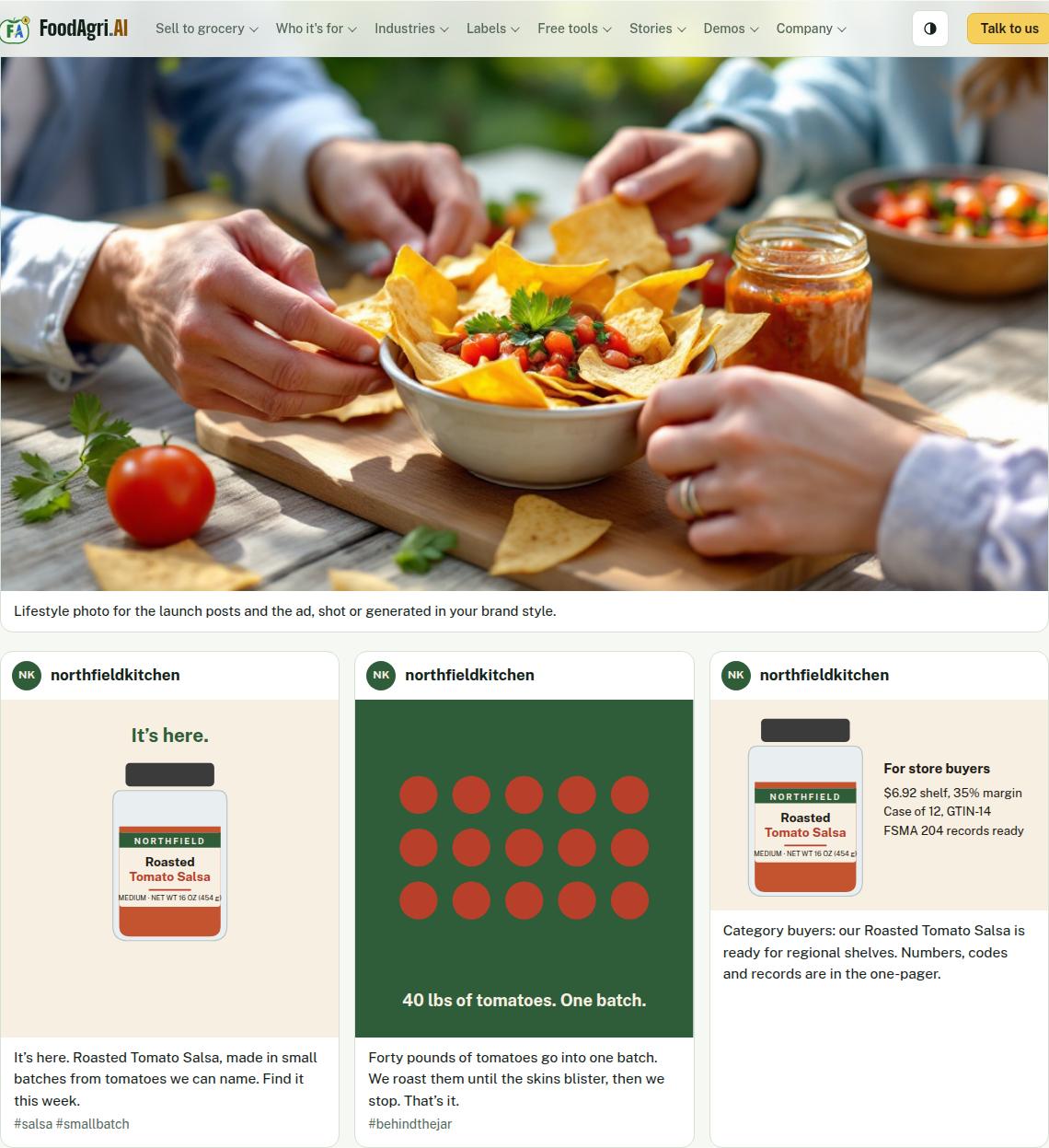
Real screens from our reports and dashboard, made for a made-up brand. Click any one to open the full sample.
Make the package retail-ready
A retail buyer looks at the label before the taste. The label must show the product name, net weight, ingredients, allergens and a barcode. Check the labeling rules in the USDA and FDA guidance for your product type before you print.
Your case size and pallet pattern also matter. Ask a store or distributor what carton and pallet sizes they handle before you order a run of packaging.
Price and margins
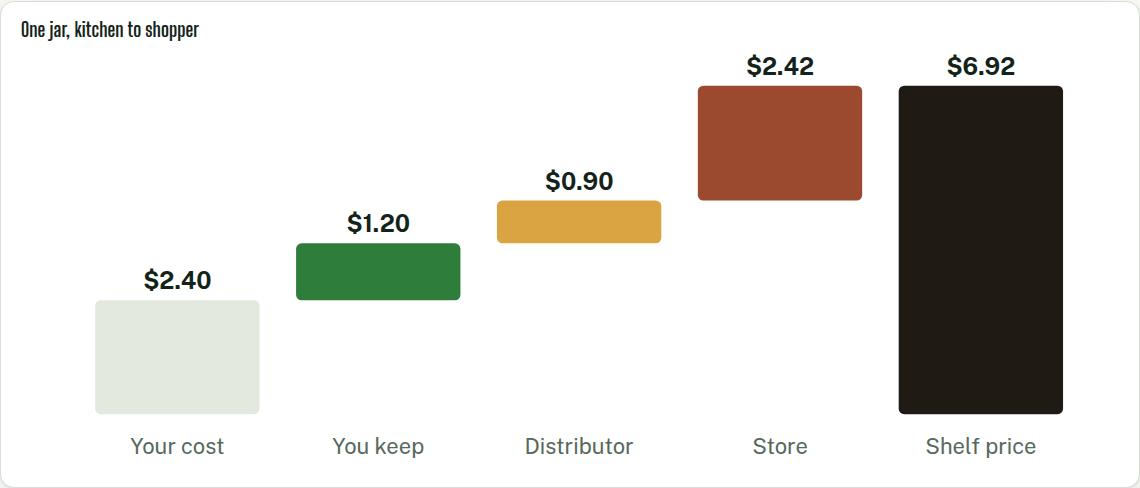
Work backward from the shelf price. Stores and distributors each take a share of the retail price, so your wholesale price must leave you enough to cover ingredients, packaging, labor and delivery.
Some retailers also ask for slotting fees, which are payments for shelf space. Ask about these early and write them into your cost model. A small business guide from the SBA can help you build a simple budget.
Distributors and brokers
A distributor buys your product, holds it in a warehouse and delivers it to stores. A broker sells on your behalf to distributors and retailers but usually does not take ownership of the goods.
Both roles take a fee or margin, so compare the total cost of each path. Your state department of agriculture or a university extension office can point you to local buyers and food business programs.
Pitch a category buyer
Category buyers manage a whole group of products, such as snacks or frozen foods. Bring a short sell sheet with your product facts, price, case pack, shelf life and delivery terms.
Start with a clear reason the buyer should carry your product, and offer a small trial order. Follow up on the date you agreed, and keep notes on what each store asks for.
Want this worked out for your product?
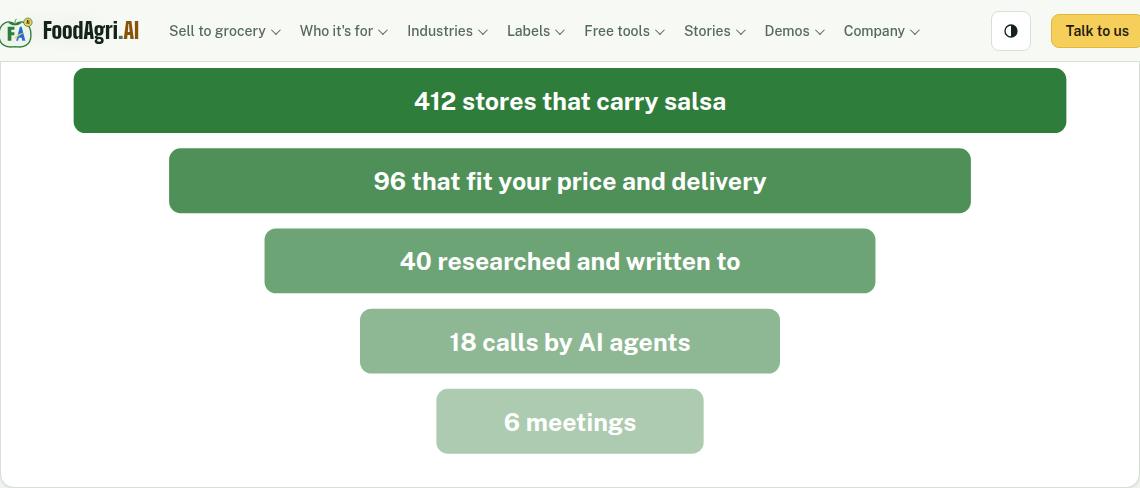
Send your product and price. A person sends back a first shelf plan: stores to try, a price check and a sell-sheet outline.
Questions makers ask
How do I set my wholesale price?
Work backward from the shelf price. Stores and distributors each take a share, so your wholesale price must still cover ingredients, packaging, labor and delivery.
What is a slotting fee?
A payment some retailers ask for in return for shelf space. Ask about it early and put it in your cost model.
Distributor or broker?
A distributor buys, warehouses and delivers your product. A broker sells it for you and usually does not take ownership. Compare the total cost of each path.