How Private-Label Food Makers Find Store-Brand Buyers
What you can do on this page
- Read the short answer just below.
- Use the free tool to score how buyer-ready you are.
- Ask for a free one-page shelf plan for your own food. A person writes it.
Short answer
A private-label maker produces food that is sold under another company's name, such as a grocery chain's store brand or a brand owner that has no plant of its own.
Your leads are the people who buy that work: store-brand teams at retailers, brand owners looking for a co-packer, and distributors with their own labels. A good lead is one whose product, volume and food safety needs fit what your plant can already make.
How store-brand deals start
- Know your plantProducts, pack sizes, minimum run
- Pass food safetyFDA registration, audit
- Meet buyersPLMA shows, supplier requests
- Follow upTrack every lead and quote
Are you ready for a store-brand buyer?
The items come from what buyers check first, in this guide. Each buyer has its own list; ask for it.
In our product
What you get, as our customers see it.
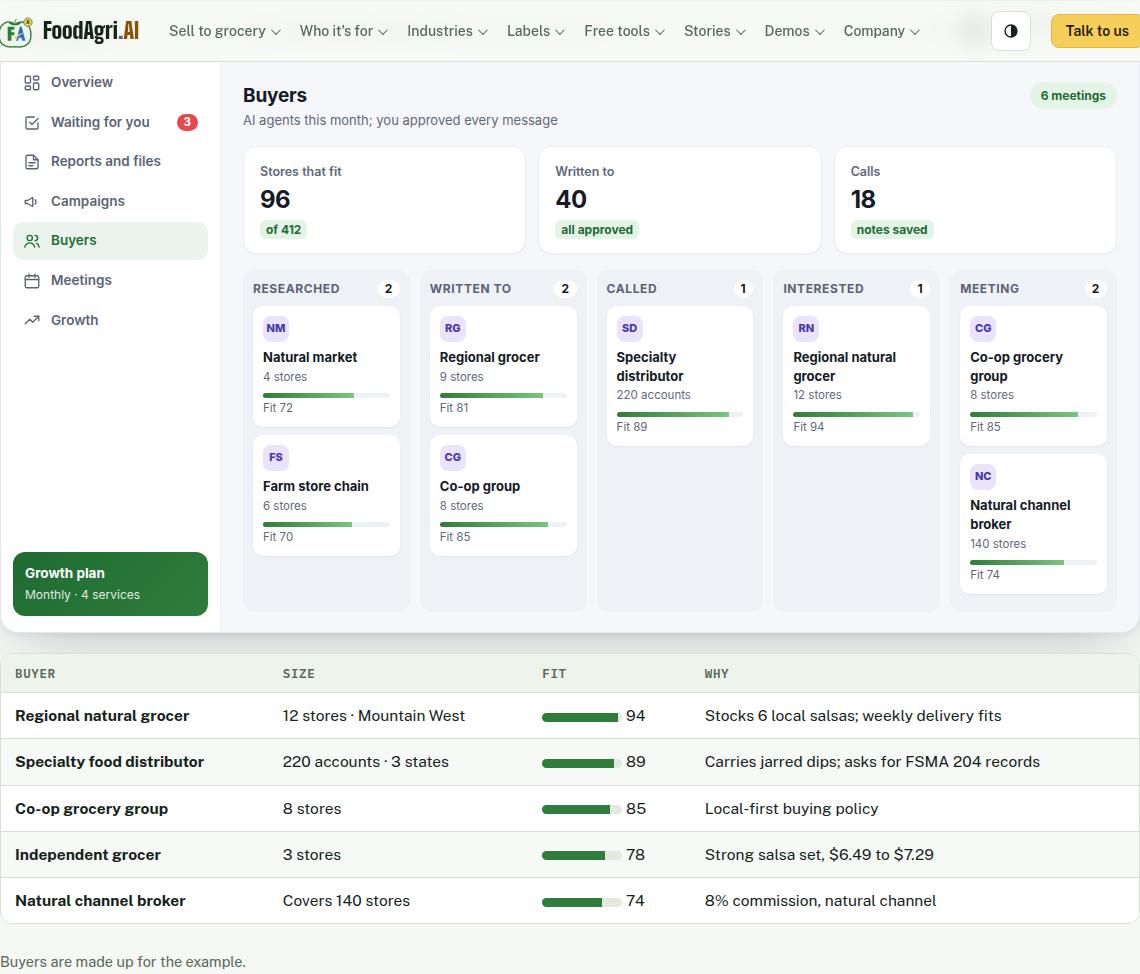
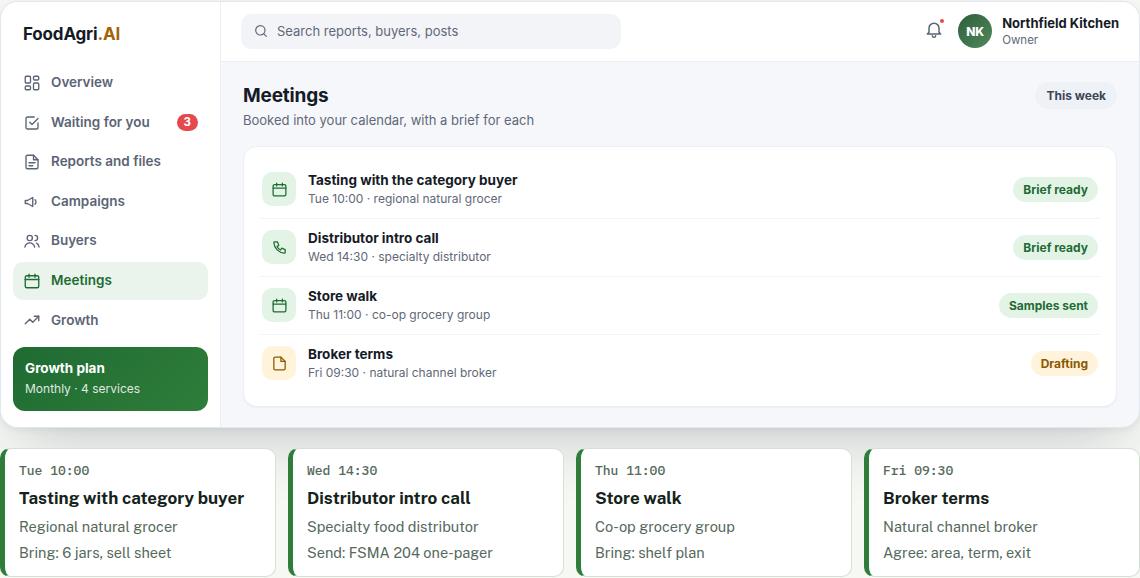
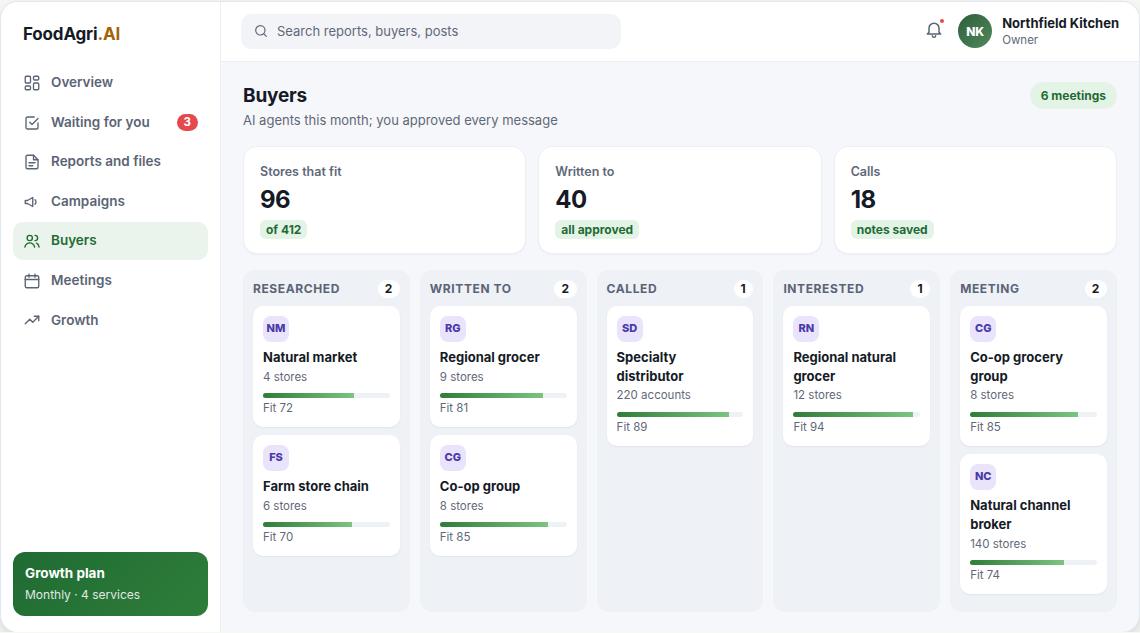
Real screens from our reports and dashboard, made for a made-up brand. Click any one to open the full sample.
Who buys private-label food
Grocery chains, club stores and discount stores run store-brand programs. Each program has buyers or sourcing managers who choose the plants that make their products.
Brand owners and young brands often look for a co-manufacturer to make their recipe at scale. Foodservice distributors also buy products packed under their own labels.
What buyers check first
Food safety comes first. A facility that makes, processes, packs or holds food for people in the United States must register with the FDA, and most such plants must also follow the FSMA preventive controls rule. Many retail buyers ask for a recent audit under a food safety scheme benchmarked by the Global Food Safety Initiative (GFSI).
Next come the business facts: the products and pack sizes you can run, your minimum run size, lead time, price per case, and whether you can print to the buyer's own label specification.
Where to meet buyers
PLMA, the Private Label Manufacturers Association, runs a yearly U.S. private label trade show in Chicago. PLMA International runs the World of Private Label show in Amsterdam. Both bring retail buyers and store-brand suppliers together in one place.
Outside the shows, watch for retailer supplier requests, ask your packaging and ingredient suppliers who is looking for capacity, and ask brokers who already sell to the chains you want.
Follow up and keep track
Bring a one-page capability sheet: product types, line types, run sizes, lead times, food safety audit results and the certifications you hold. Send samples only against a written spec.
Follow up on the date you agreed, and keep one record per buyer with their spec, the samples sent and the next step. Build your price from a simple cost model, such as the one in the SBA business plan guide, so a large order does not lose money.
Ready? Let us find who needs your plant.
Tell us what you make. A person sends back a first list of store-brand buyer types to approach and how to reach them.
Questions makers ask
Who buys private-label food?
Store-brand teams at grocery, club and discount chains, brand owners who need a co-manufacturer, and foodservice distributors with their own labels.
What do buyers check first?
Food safety: FDA registration, the preventive controls rule and often a GFSI-benchmarked audit. Then your products, run size, lead time and price per case.
Where can I meet store-brand buyers?
PLMA runs a yearly U.S. private label show in Chicago, and PLMA International runs World of Private Label in Amsterdam.