What a broker would cost you
Click a broker type, then move the sliders
Ranges 3–5% conventional grocery, 8–12% natural and specialty (directional, not a quote). Sources: a grocery broker cost guide, a natural-channel broker guide.
For food manufacturers and co-packers
We map the buyers and channels that fit what your plant already makes, then give your sales team a clear, sourced brief of where to go next.
In our product
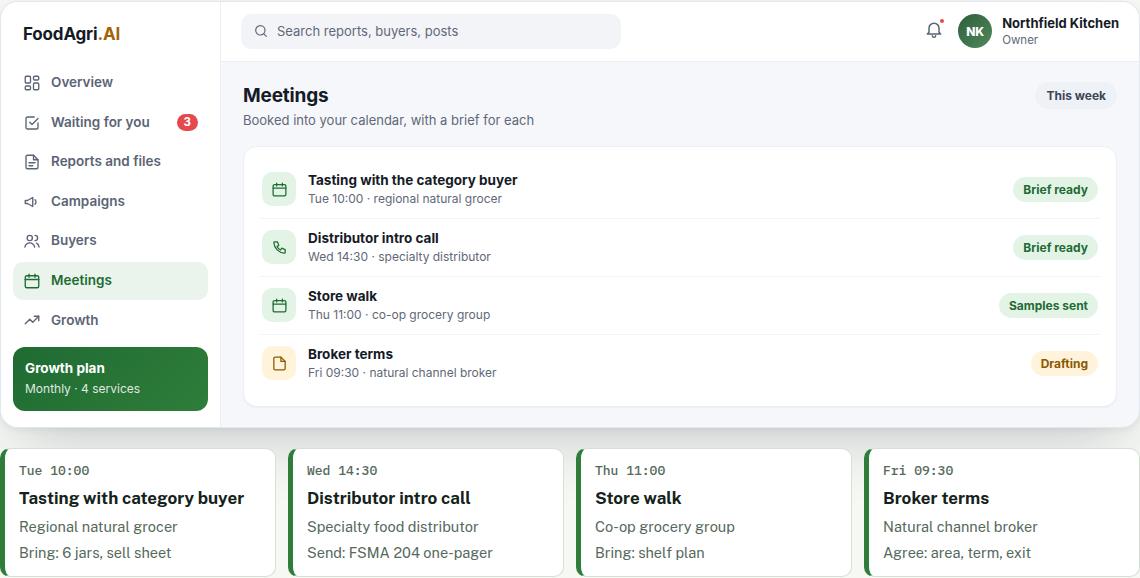
Real screens from our reports and dashboard, made for a made-up brand. Click any one to open the full sample.
What you would receive
A six-page brief for a fictional manufacturer, North Valley Foods, and two scenes from the matching two-minute film.
 Sample · fictional client
 Sample · fictional client
So who buys a case of frozen patties? A restaurant group wants the same size and cook time in every location. A distributor wants case packs that fit its trucks and its customers. A private label brand wants a partner that can make its recipe under its own name. Each buyer asks different questions, and one generic pitch answers none of them well. That is the work we do: we map which buyers fit what the line already makes, with sources anyone can check. Then we write the story in each buyer's language.
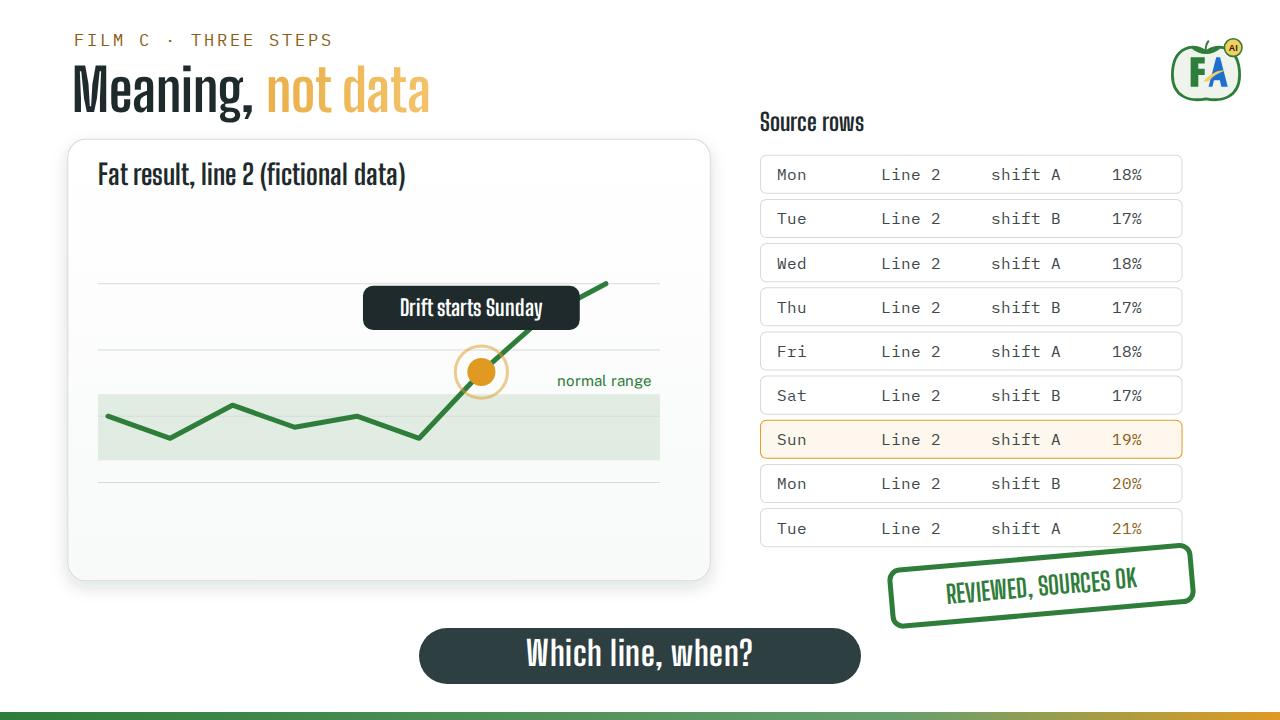
Full two-minute script in four chapters. Narration is recorded only after you approve the script.
All names, products and numbers in these samples are fictional. A real deliverable uses your data, its sources, and a reviewer sign-off.
In numbers
Move the sliders and click the charts. Every figure says where it comes from.
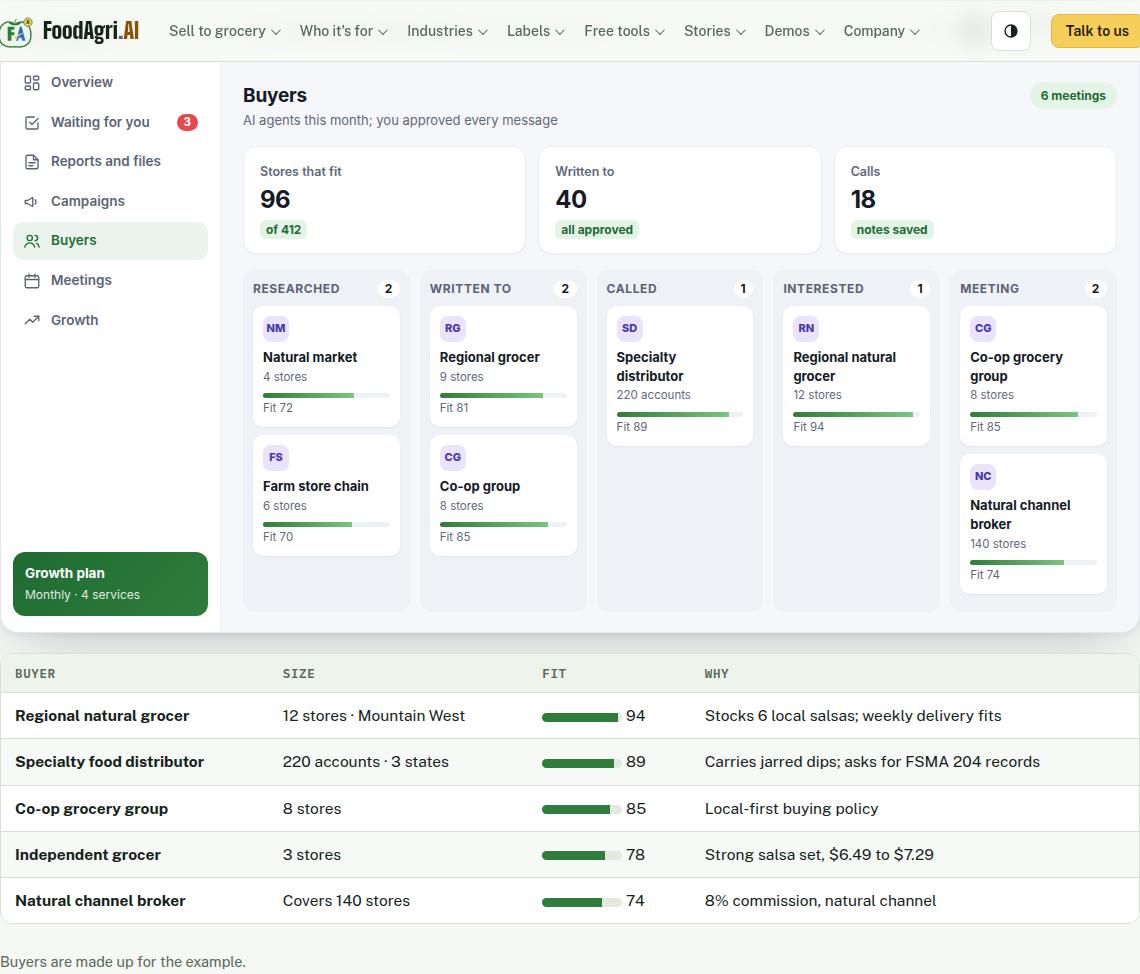
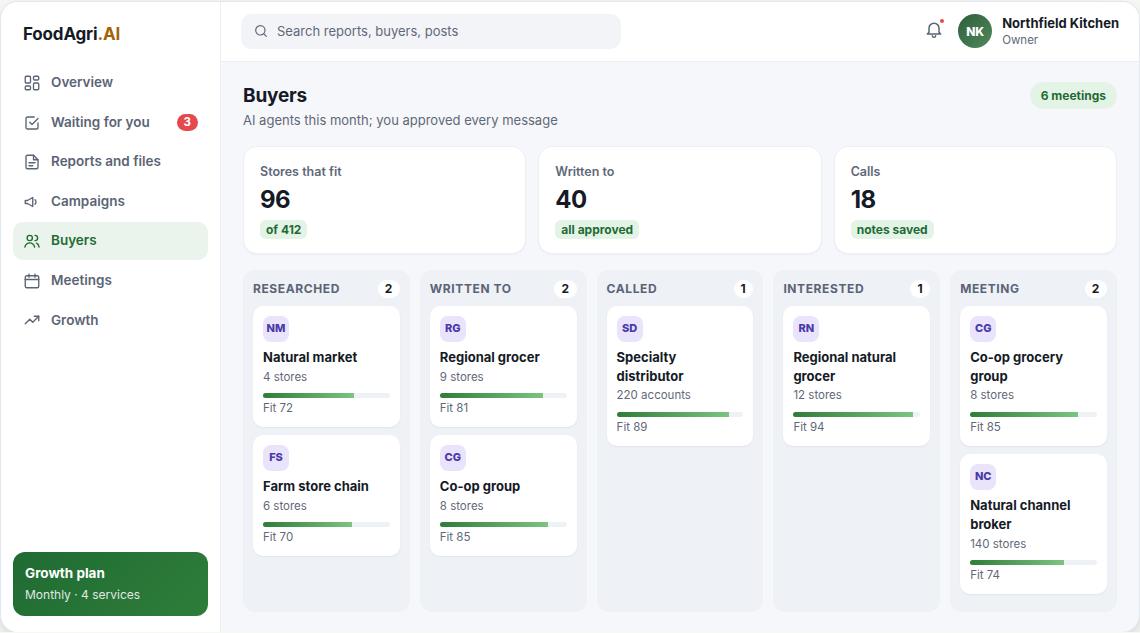
A broker takes a share of your sales. A good buyer list means you only call stores that already carry food like yours.
Click a broker type, then move the sliders
Ranges 3–5% conventional grocery, 8–12% natural and specialty (directional, not a quote). Sources: a grocery broker cost guide, a natural-channel broker guide.
Click a stage to see what we do there
Move the sliders, click a colour to see what it is
Start values from our guide How to sell to grocery stores: cost $2.40, your price $3.60, markup 25%, margin 35%. Your real margins come from your distributor and store.
Sample dashboard
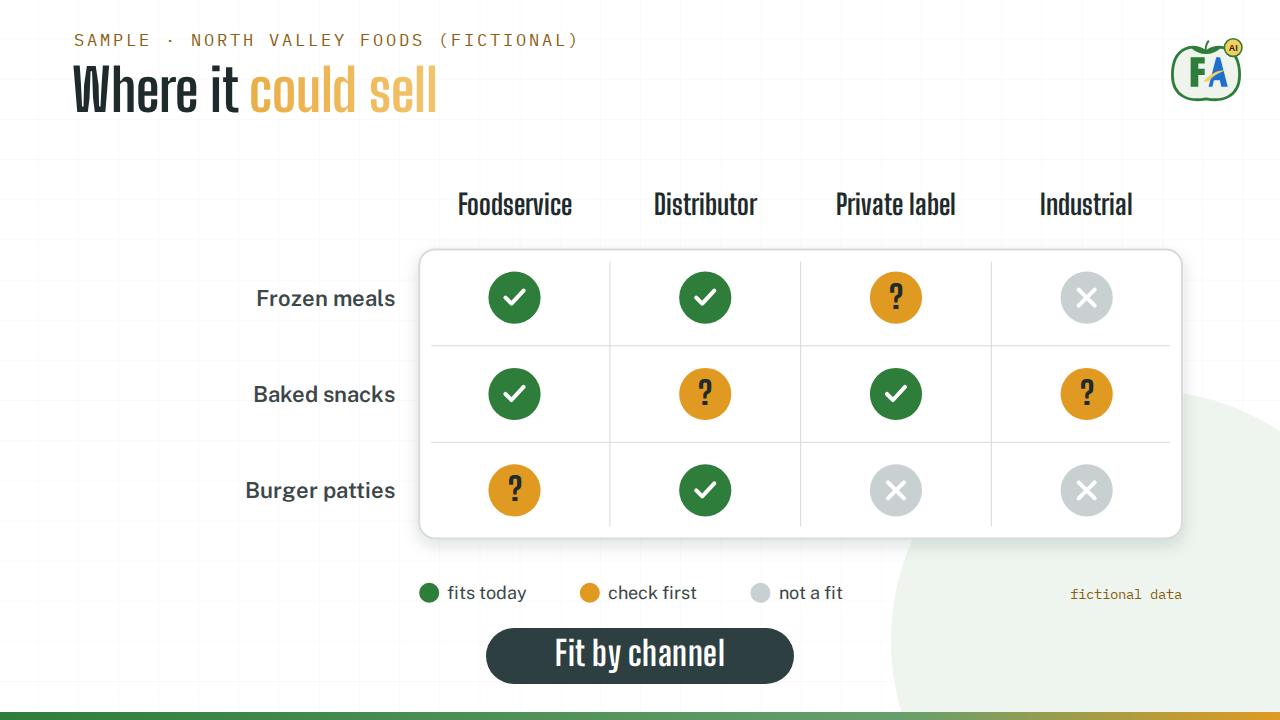
Each cell is a judgement with a reason and a source behind it. Fictional data for North Valley Foods.
| Product | Foodservice | Distributor | Private label | Industrial |
|---|---|---|---|---|
| Frozen meals | Fits today | Fits today | Check first | Not a fit |
| Baked snacks | Fits today | Check first | Fits today | Check first |
| Burger patties | Check first | Fits today | Not a fit | Not a fit |
Where new customers come from
We look at the channels that fit your products and your plant, not one retail playbook.
Restaurant groups, schools, hospitals and contract caterers that need the same product every week.
Regional and broadline distributors with the right cold chain and routes.
Brands and retailers looking for a qualified manufacturing partner.
Other food makers that need your product as an ingredient or extra capacity.
Is this for you
How it works
Every engagement starts with a conversation. Scope and price come after it, in private.
A 30-minute call about what you make or sell, who you want to reach and what decision you need to make.
A short, fixed piece of research that answers one question with sources you can check.
We build the buyer brief, the one-pagers and the first messages. You approve every word before anything is sent.
Approved work goes live. Every week you see what happened, in plain words.
Book a 30-minute call
We come to the call with a first view of your best channels.
Questions
No. We research buyers that fit your product and show the reason each one fits. Your team decides who to contact.
No. We need product formats, volumes and where you ship today. Recipes stay with you.
Pricing is private. After a short call we send a written scope and price for your situation. There are no public packages or tiers.
No. We report what we did and what happened: research delivered, messages approved, replies, calls booked. We do not promise sales, placements or rankings.
Your files stay in your own workspace and are never used for another customer. Real customer data is only shared after a confidentiality agreement.
A 30-minute call tells you what you need next and what you would receive. The same four steps for every path, and you decide at the end of each one whether to go on.
You tell us what you make and what you need. No slides. We say plainly if we are not the right fit.
A short brief: who buys, what the rules say, where the price room is, and the sources behind each answer.
The pages, videos, reports and outreach drafts the plan needs, in your brand.
You approve every send and post. We report what worked and change what did not.