The FDA Food Traceability Rule (FSMA 204) in Plain Words
What you can do on this page
- Read the short answer just below.
- Use the free tool to check if the rule covers your food.
- Ask for a free one-page shelf plan for your own food. A person writes it.
Short answer
The Food Traceability Rule comes from Section 204 of the Food Safety Modernization Act. It asks businesses that make, process, pack or hold certain foods to keep extra records, so the FDA can trace those foods quickly during an outbreak or recall.
It only applies to foods on the FDA Food Traceability List. If none of your products are on that list, these extra records are not required for them.
Is FSMA 204 your job? Four checks
- Check the listIs your food on the FDA Food Traceability List?
- Map your eventsHarvest, cool, pack, ship, receive, transform
- Record key dataLot code, quantity, product, dates, places
- Write the planHow your records work, in writing
Does the rule touch your products?
A first check, not legal advice. The list above is the FDA's own examples; read the full Food Traceability List and the exemptions before you decide.
In our product
What you get, as our customers see it.
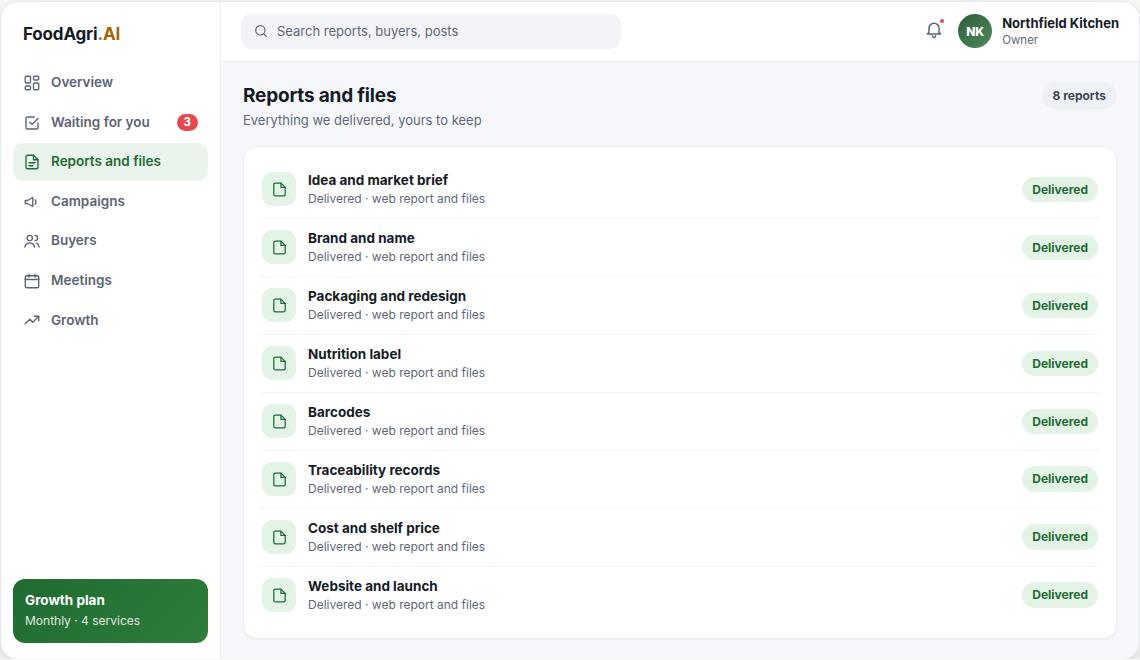
Real screens from our reports and dashboard, made for a made-up brand. Click any one to open the full sample.
Which foods it covers
The Food Traceability List names the foods the FDA chose for the extra records. Examples include leafy greens, fresh herbs, melons, tomatoes, peppers, cucumbers, fresh-cut fruits and vegetables, shell eggs, nut butters, soft cheeses, finfish and shellfish.
Read the full list on the FDA site, because it also explains when a food on the list is covered as an ingredient in another product.
Events and records
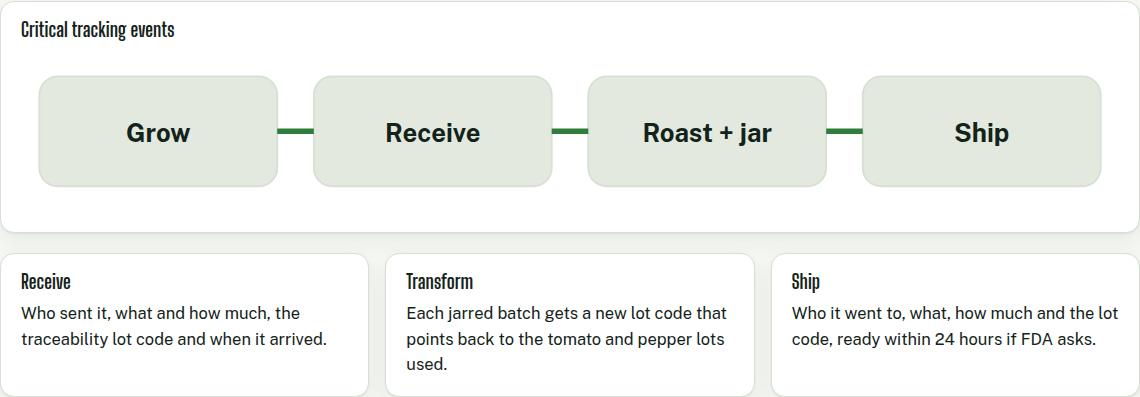
The rule is built around critical tracking events. These are steps such as harvesting, cooling, initial packing, shipping, receiving and transformation, which means changing a food or making a new product from it.
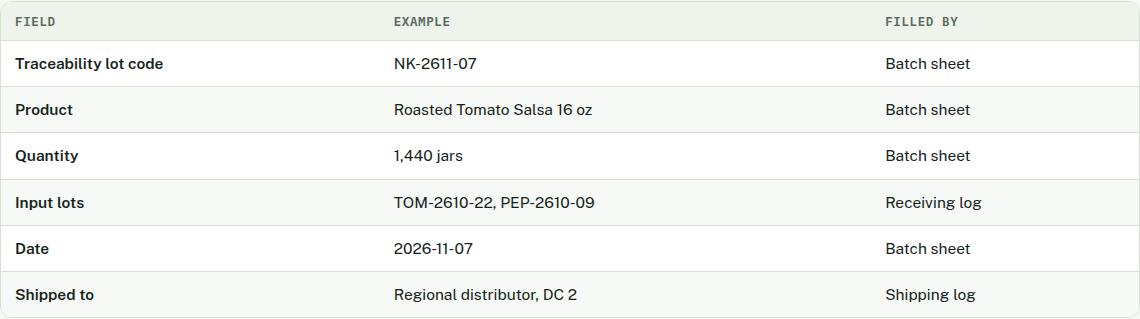
For each event you keep key data elements, such as the traceability lot code, the quantity, the product description, the dates and the locations involved. You also keep a written traceability plan that explains how your records work.
Who may be exempt
Some small farms and businesses are fully or partly exempt, and some foods are exempt when they receive certain kinds of processing. The FDA publishes the exemptions with the rule.
Check your own case against the FDA pages before you decide the rule does not apply to you.
Where the compliance date stands
The original compliance date was January 20, 2026. In August 2025 the FDA proposed moving it by 30 months, to July 20, 2028, and Congress later directed the FDA not to enforce the rule before that date.
Check the FDA rule page for the current status before you plan your own timeline.
Records sorted. Now sell more of it.
Traceability keeps you on the shelf. A shelf plan gets you onto more of them.
Questions makers ask
Does FSMA 204 apply to every food?
No. It applies only to foods on the FDA Food Traceability List. If none of your products are on it, the extra records are not required for them.
What records does the rule ask for?
Key data elements, such as the lot code, quantity, product, dates and places, for each critical tracking event, plus a written traceability plan.
When do I have to comply?
The original date was January 20, 2026. The FDA proposed moving it to July 20, 2028, and Congress directed the FDA not to enforce it before then. Check the FDA page for the current date.